One enduring achievement of Walter Wurzburger, our founder and first principal conductor, has been the Kingston Philharmonia, which celebrated its 50th anniversary in 2024. In the dark ages before we existed, Kingston’s musical landscape was, in the words of Hilton Tims of the Surrey Comet, “bleak and spare”. There is a tribute to Walter at the foot of this page.

When Walter retired after 16 years in 1991, we expected to enter a lean period – but far from it. On announcing our plight to the world, and with the help of Sally Mays, an old friend of the orchestra and of Walter, we had no fewer than eight candidates for the vacant post; most would have done the orchestra credit, and all would have enlivened our Friday nights. One candidate – musically impeccable – proposed to retrain the orchestra a century per year: in the first year a baroque orchestra, in the second rivalling the London Mozart Players (in name at least), and so on. This was not what we had in mind.
The problem of choice was solved by the suggestion that each conductor be given a rehearsal, to be assessed both musically and afterwards in the Springfield Arms (although more weight was given to the former). A voting system was devised that would have done credit to the Electoral Reform Society, and in March 1992 Stephen Whittaker became our principal conductor.
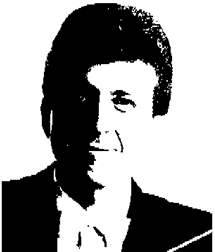
Stephen Whittaker had been a professional percussionist, and made an outstanding conductor. It is interesting to speculate on the connection between ex-percussionists and amateur orchestras – perhaps inculcating a sense of rhythm is a high priority!
Stephen had high expectations of us, which was occasionally a source of creative tension – but some fine performances arose from it, a high point being a performance of the Enigma Variations. It came as a shock and a source of sadness when he announced he was leaving the music profession, giving his last concert in December 1995.
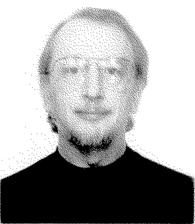
In early 1996 we appointed the orchestra’s third principal conductor, Tom Hartman. Tom was a flamboyant American, complete with goatee, and as comfortable in the jazz world as the classical – he ran a regular Jazz Workshop in Richmond. Rehearsals were reminiscent of Berlioz’s “Evenings in the Orchestra”, and we often spent as much time enjoying anecdotes as playing.

The orchestra decided in 1998 that it needed to raise its sights, and the choice of conductor virtually made itself: more than one member had met Levon Parikian at summer schools, and he came with glowing recommendations.
Amateur orchestras need conductors who are themselves professional, but who recognise the special needs of amateurs – second to none in their love of music, but not able to devote unlimited time to it. Lev, who also conducts professional orchestras, is an outstanding example of this breed, extracting performances that can be as moving and exhilarating as those of a professional orchestra.

In July 2015, following a highly successful concert, we secured the services of Scott Wilson as conductor and Musical Director. Born in Australia, Scott moved to the UK to study at the Guildhall School of Music and Drama, and has worked with the Birmingham Contemporary Music Group, the Philharmonia Orchestra, the Royal Shakespeare Company and the Royal National Theatre. He gave his last concert with us in June 2017.
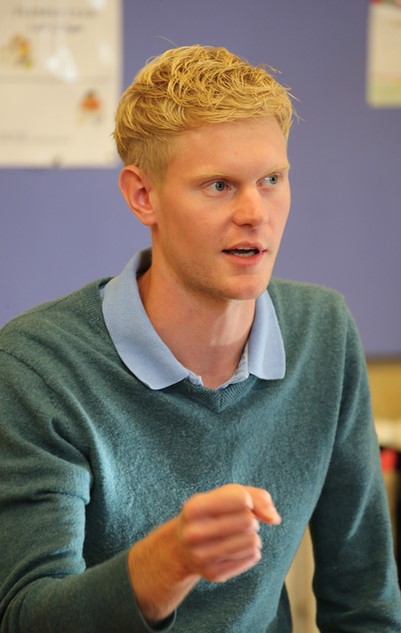
Lewis Gaston was appointed our Musical Director in 2018, and led our 50th-anniversary year in 2024 with programmes ranging from Bruckner’s Symphony No. 4 to Mussorgsky’s Pictures at an Exhibition. You can read more about Lewis on our About Us page.
Remembering our founder, Walter Wurzburger (1914–1995)
The following notes accompanied the memorial concert for Walter Wurzburger.
Walter was born in Frankfurt in 1914. A pupil of Mátyás Seiber, he covered the whole musical spectrum, from classical to jazz, as player, composer, conductor and teacher. He was forced to leave Germany in 1933, going to France, Singapore, Australia and finally Britain.
With often no more than a string quartet and a bagful of woodwind, he gestated and gave birth to the orchestra, with rare single-mindedness, energy and – most important to those of us willingly seduced into his project – endless optimism and infectious enthusiasm.
At the time of Walter’s retirement in 1991, we entered the complete list of performed works into the computer and waited. Since 1974 we had given 79 concerts, including two in Southwark Cathedral, with a repertoire of 168 symphonies, 40 concertos, 8 oratorios and 19 other works by composers ranging from Abel, Albinoni and Arne to Weber, Weill and Wurzburger. In a very real sense, this has been and always will be “Walter’s orchestra”.
There follow some personal memories – anybody with memories to share is welcome to contribute.
Walter was a born teacher and communicator. I first met him in 1974 at Kingston Poly, and played in the foundling Kingston Philharmonia. Work took me away, and when we met again at a party some years later he reminded me that I had missed some 250 rehearsals, and it would be a pity to miss any more! He also said – and this was characteristic – “We need you… and you need us.” The second was certainly true, and I have remained with the orchestra ever since.
While others’ idea of a Viennese evening might be Strauss, Strauss and Strauss, he brought together early Berg and Schoenberg with late Mahler – an illuminating conjunction. When I once suggested our rehearsals of Hindemith’s “Mathis der Maler” might benefit from a better understanding of what the music was about, he exclaimed: “Explain? Why, it is self-evident!”
After his death, Hannah discovered some notes he had jotted down, probably from a radio broadcast, which seem to summarise the man and his works:
“No false sentimentality. No compromise. Tough. No playing to the gallery.”
Martin Buber wrote: “It is a glorious thing to be old, when we know how to begin again not by being young, but by becoming old in a young way.” This typifies Walter – the wisdom and authority of one who has lived a long and full life, and the openness and freshness of a child starting out on a journey.
Dan Hamm
To know more about Walter Wurzburger, visit www.wurzburger.org.